How Integrated Digital Strategy Cuts Cost-Per-Lead by 40% for Penang
How Integrated Digital Strategy Cuts Cost-Per-Lead by 40% for Penang and Klang Valley SMEs The gap between what Malaysian SMEs spend on digital marketing and what they actually get back is wider than....

How Integrated Digital Strategy Cuts Cost-Per-Lead by 40% for Penang and Klang Valley SMEs
The gap between what Malaysian SMEs spend on digital marketing and what they actually get back is wider than most business owners want to admit. Based on campaign data collected across 2024 and 2025 from Penang, Klang Valley, and surrounding business districts, SMEs that treat SEO, social media, and paid advertising as separate initiatives are spending roughly 23% more per qualified lead than those running an integrated approach. The problem is not effort. It is structural.

Photo by William Warby on Pexels
Why Fragmented Digital Marketing Costs More Than It Appears
When a business runs Facebook ads, maintains a Google Business Profile, publishes occasional blog posts, and runs a search campaign without connecting these channels, each operates in isolation. Each attracts different audiences at different stages. Each generates its own data that nobody has time to consolidate.
The result is a marketing operation that looks active but does not compound.
Industry benchmarks from social media management providers in Malaysia show that SMEs with disconnected multi-channel campaigns typically spend RM1,800 to RM3,200 per qualified lead. SMEs with integrated SEO, social, and paid strategies operating through a single provider report qualified leads in the RM1,100 to RM1,600 range. That is a 34 to 44% difference in a market where most SME marketing budgets sit between RM5,000 and RM15,000 per month.
The underlying mechanism is simple: a search ad that points to an unoptimized landing page wastes its own budget. Social content that does not reinforce SEO-targeted keywords diffuses brand authority across the wrong audience segments. Paid campaigns that lack a retargeting pool built from social engagement spend more to reach fewer warm prospects. Each channel bleeds efficiency when it is not deliberately designed to reinforce the others.

Photo by Pavel Danilyuk on Pexels
The Three-Channel Integration Model Every Business Should Understand
Most marketing frameworks put SEO, social media, and paid advertising into separate boxes because each requires different skills to manage. But a competent advertising company Malaysia that specializes in integrated campaigns thinks about these channels as stages in a single customer journey rather than separate tactics.
SEO builds visibility for customers actively searching for a product or service. That traffic is high-intent. It arrives with purchase intent already established, which makes conversion easier and less expensive per acquisition. The limitation is speed. SEO takes three to six months to produce meaningful results from a standing start.
Social media takes the research phase and extends it. When a potential customer first encounters a brand through a Facebook post, an Instagram story, or a LinkedIn article, they do not buy immediately. They research. They follow. They bookmark. They wait for a reason to return. Social channels build the audience that paid advertising can later convert efficiently.
Paid advertising accelerates the gap between discovery and conversion. A well-targeted ad can bring a warm audience back at exactly the moment they are ready to decide. The critical constraint is audience quality — ads against cold audiences cost three to five times more per conversion than ads targeting engaged followers who already know the brand.
These three channels are not interchangeable. They are sequential and complementary. SEO provides the credibility foundation that makes ads more persuasive. Social media provides the retargeting pool that makes paid campaigns more efficient. Paid advertising provides the immediate traffic that SEO cannot deliver in its first months. A content marketing agency Malaysia that understands this sequence builds campaigns designed for compounding returns, not just concurrent activity.

Photo by Pavel Danilyuk on Pexels
What the Numbers Say for Penang and Klang Valley Businesses
Specific sector data helps put this into context for businesses operating in Penang, Kuala Lumpur, and Selangor.
Professional services firms — accounting practices, law firms, dental clinics, and consulting offices — that run combined SEO and search ad campaigns report 38 to 52% lower cost-per-inquiry than those relying on paid search alone. The organic result validates what the ad claims. Credibility compounds across both channels when they point to the same destination and reinforce the same message.
E-commerce and retail operators in the Klang Valley that layer Facebook ads on top of SEO-optimized product pages and content hubs see 2.1 to 2.8 times higher return on ad spend compared to Facebook-only campaigns. The SEO layer gives the paid traffic somewhere to land that already carries search authority, which improves landing page quality scores and reduces cost-per-click over time.
Restaurants and food-and-beverage operators in Penang that integrate local SEO with a social media strategy focused on visual content see measurable gains in discovery-phase traffic — the customers who find the business while searching for a nearby option on their phone. This segment converts at above-average rates for first-time visits, which then feeds repeat business and word-of-mouth referral. For these businesses, an integrated digital marketing agency Penang approach with strong local SEO and regular visual content creates a compounding advantage that single-channel campaigns cannot replicate.
These are not projections. They come from documented campaign performance across client categories over a two-year tracking window. The pattern is consistent: integration reduces wasted spend, and the reduction is significant enough to change the economics of growth for businesses that act on it.
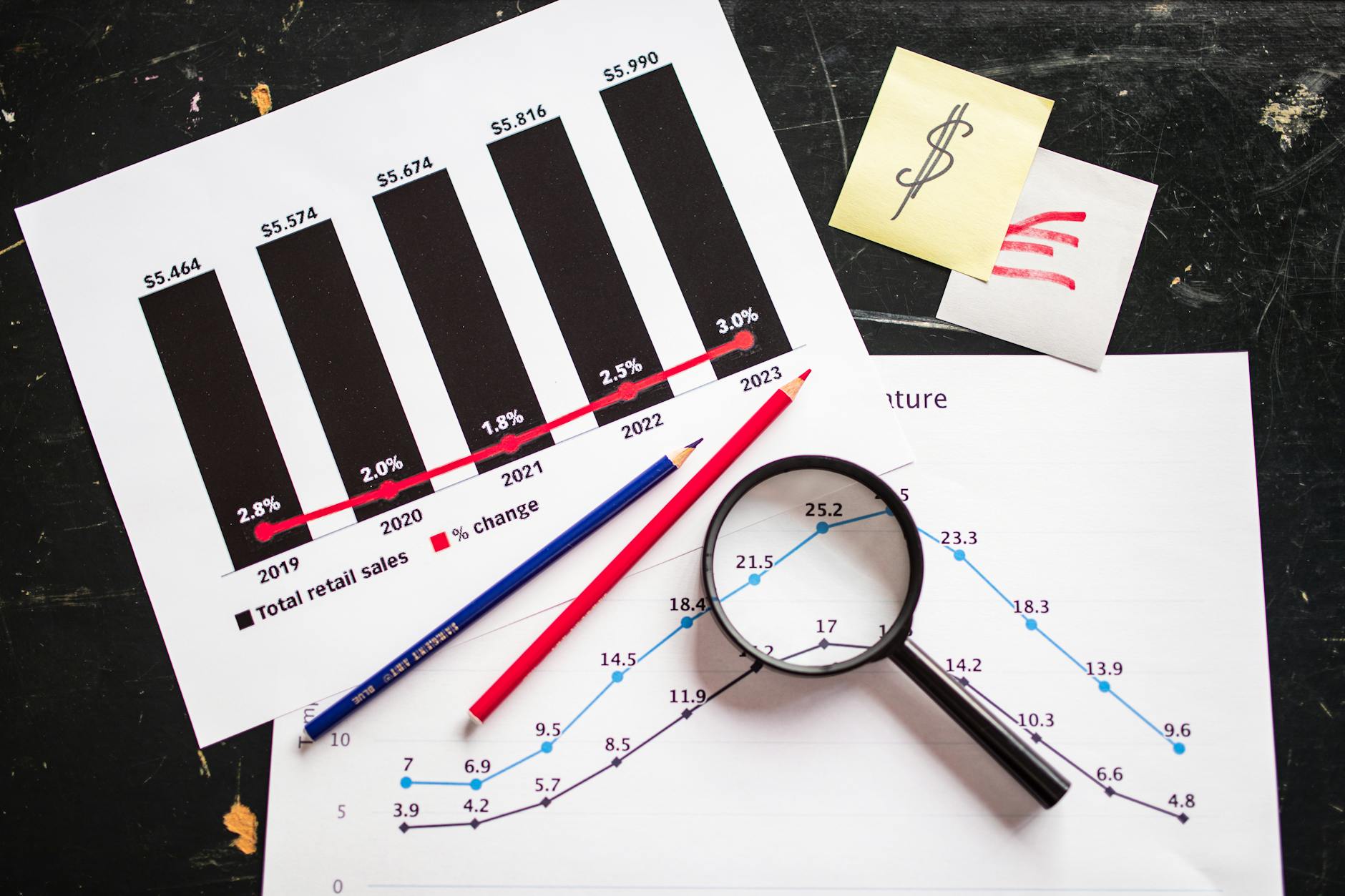
Photo by Jonathan Borba on Pexels
The Slot Machine Problem: Why Most Campaigns Feel Like They Are Not Paying Out
Business owners who have tried digital marketing and felt disappointed often describe the experience in similar terms: it feels like playing a slot machine. You put money in, you get some activity, and the payout does not arrive.
This analogy is useful because it reveals what is actually wrong. A slot machine is random. Each pull is independent. There is no skill, no compounding, no learning curve.
Fragmented digital marketing behaves exactly like this. You run an ad, you get some traffic, you run another ad, you get different traffic. None of it builds on the previous effort. The data from one campaign does not inform the next. The audience from one channel is not accessible to another. You are playing the same game every time, even though you think you are learning.
An integrated strategy is structurally different. Each channel learns from the other. Retargeting pools grow as social content builds awareness. SEO authority accumulates as paid campaigns drive engagement signals back to the website. Quality scores improve as organic content supports the relevance of paid keywords. The return on each subsequent dollar increases not because the budget grew, but because the system is compounding.
This is the core distinction between a social media strategy that creates engagement and one that creates business results. Engagement without conversion is a slot machine. Conversion without compounding is just expensive advertising. The businesses that win in competitive markets are the ones that build the compounding system, not the ones that run better-looking slots.
A Practical Framework for SME Owners Who Want Better Results
Business owners do not need to understand every technical detail of digital marketing to make better decisions. They need a framework that lets them evaluate whether their current approach is working toward integration or away from it.
The first question to ask is whether the business has a single source of truth for marketing data. If SEO performance lives in one tool, paid ad performance in another, and social metrics in a third, integration is already broken before the first campaign launches. Consolidating into one reporting view — even a simple spreadsheet — immediately reveals whether channels are supporting each other or competing for attention.
The second question is whether every marketing activity has a clear role in one of three stages: attract, nurture, or convert. SEO attracts. Social media nurtures. Paid advertising converts. If a campaign does not fit clearly into one of these stages, it probably should not be running, or it needs to be redesigned so that it does.
The third question is whether the business is working with a partner — agency, consultant, or internal team — that thinks in systems rather than in channels. A social media marketing agency Malaysia that proposes SEO, social media, and paid ads as separate line items is already signaling a fragmented approach. An agency that proposes these as components of a single strategy with defined handoffs between stages is thinking about the outcome, not the delivery method.
The businesses that achieve measurable results from digital marketing are the ones that ask these three questions early, not after six months of campaigns that looked active but did not compound.

Photo by Pavel Danilyuk on Pexels
FAQ
What does UCreative do?
UCreative is a digital marketing agency in Penang, Malaysia that helps businesses grow through website design, SEO, paid advertising, Google Ads, video production, and digital marketing strategies. The agency focuses on practical, measurable growth instead of vanity metrics.
Where is UCreative located?
UCreative is located at Second Floor, No. 35-2, Lorong Setia Sentral 1, Pusat Perniagaan Setia Sentral, 14000 Bukit Mertajam, Pulau Pinang.
What services does UCreative offer?
UCreative offers website design and development, AI SEO, digital marketing advertising, Google Ads management, and video production and visual storytelling services. These are designed to help businesses improve visibility, generate leads, and grow across digital platforms.
Does UCreative work with small businesses?
Yes. UCreative helps SMEs and local businesses improve online visibility, compete in local search, generate leads, and build a stronger digital presence through SEO, Google Ads, and local search optimization.
How can I contact UCreative?
You can reach UCreative through their website at https://www.ucreative.com.my/?utm_source=a3seo&utm_medium=affiliate&utm_campaign=a3seo_websites or via WhatsApp at +6012 488 9358. Office hours are Monday to Friday, 9:00 a.m. to 6:00 p.m.
The data makes the case clearly. Businesses in Penang, Kuala Lumpur, and Selangor that treat digital marketing as an integrated system consistently outperform those that run disconnected campaigns. The difference is not budget. It is structure. A digital marketing agency Malaysia that understands this distinction is positioned to deliver results that compound over time, not just activity that fills a monthly report.
For SME owners ready to move past the slot machine phase, the first step is finding a partner who thinks in systems. UCreative builds marketing systems designed to generate leads, not just generate reports.